Starting October 1, 2026, New Jersey presumes every worker is an employee unless the business proves all three prongs of the state's ABC test. The rule reaches roughly 1.7 million independent contractors, and a $2.775 million trucking settlement this summer shows regulators are done treating misclassification as a paperwork error.

Key Takeaways
For years, the calculus for a New Jersey business using independent contractors was straightforward: classify carefully, document the relationship, and the burden sat with the state to prove otherwise if questions ever came up. That calculus reverses on October 1, 2026. Under New Jersey's newly finalized regulations, every worker is presumed to be an employee from the start, and the employer carries the full burden of proving otherwise. For a state with roughly 1.7 million independent contractors on the books, that is not a technical adjustment, it's a different legal starting point.
New Jersey's ABC test itself isn't new, it has governed worker classification under the state's Unemployment Compensation Law, Wage and Hour Law, and Wage Payment Law for decades. What changed on May 5, 2026, when the New Jersey Department of Labor and Workforce Development issued its final regulations, is that the state has now codified exactly how it interprets each of the test's three prongs, closing the ambiguity businesses had leaned on for years. To classify a worker as a contractor, an employer must now affirmatively establish all three: the worker is free from the business's control and direction over how the work gets done, the work falls outside the business's usual course of operations or happens away from its places of business, and the worker is customarily engaged in an independently established trade of their own.
The scope is what makes this a statewide event rather than an industry-specific one. Reporting on the finalized rule notes that it "reaches well beyond gig delivery and rideshare into financial services, trucking, construction, and any business that engages 1099 workers in New Jersey," directly affecting an estimated 1.7 million contractors statewide. The rulemaking process wasn't quiet: the public comment period was extended from 60 to 90 days, a public hearing was held, and the New Jersey Business and Industry Association reported that more than 9,500 letters opposed the proposal. Acting Labor Commissioner Kevin D. Jarvis framed the final version as responsive to that pushback, saying the department "removed provisions in the draft rules that created uncertainty and built a framework shaped by their input," while maintaining that "this action has always been about protecting workers through fairness and clarity."
Employers don't have to wait until October 1 to see what an ABC test failure costs. On July 29, 2026, the New Jersey Attorney General and the state Department of Labor announced a $2.775 million settlement with STG Logistics over allegations that hundreds of truck drivers had been improperly classified as independent contractors. Of that total, $2.22 million goes directly to the misclassified drivers and $555,000 to the state in penalties and employment-related contributions, and the agreement carries an additional $7.5 million penalty exposure if STG violates its terms going forward.
That settlement was reached under the state's existing misclassification statute, N.J.S.A. 34:1A-1.18, which sets penalties of up to $250 per misclassified worker for a first violation, up to $1,000 per worker for each subsequent violation, and an additional penalty of up to 5% of the worker's gross earnings over the preceding 12 months. Multiply that structure across a workforce the size of STG's trucking fleet and the arithmetic explains a settlement in the millions. Once the presumption of employment takes effect on October 1, that same math applies to any business that can't affirmatively clear all three prongs, not just the ones already flagged for investigation.
The part of this rule that gets less attention is what happens after a business decides a worker has to move onto payroll. Converting a 1099 relationship into a W-2 one isn't a status change in a spreadsheet, it means running that worker through payroll tax withholding, offering the benefits package other employees receive, and absorbing the full loaded cost of employment for the first time, exactly the kind of shift that pushes midsize employers toward a PEO relationship rather than building that infrastructure from scratch under a deadline. It also changes what that worker actually costs the business, a modeling problem finance teams are typically not set up to solve on short notice.
The harder problem sits on the compensation side. A newly reclassified employee needs a defensible salary, one that holds up next to what the business already pays people in comparable roles, and setting that number by guesswork creates a new pay equity exposure the moment the classification exposure closes. That gap looks wider in light of Payscale's 2026 Compensation Best Practices Report, which gathered 3,413 responses and found that only 61% of organizations have a formal compensation strategy at all. For the 39% without one, October 1 isn't just a classification deadline, it's the day they have to price a wave of new employees with no framework in place to do it.
None of this is a distant regulatory horizon story. October 1 is weeks away, a trucking company already paid nearly $3 million for getting classification wrong under the existing statute, and the finalized rule removes the ambiguity that let businesses defer the harder questions.
For HR teams with any New Jersey contractor relationships, the practical next steps look like this:

Guide
The questions to ask before routing reclassified workers through a PEO relationship, not after New Jersey's presumption of employment already applies.
Download

Guide
Frameworks for modeling the total cost of employment shift finance teams face the moment a contractor becomes a payroll line.
Download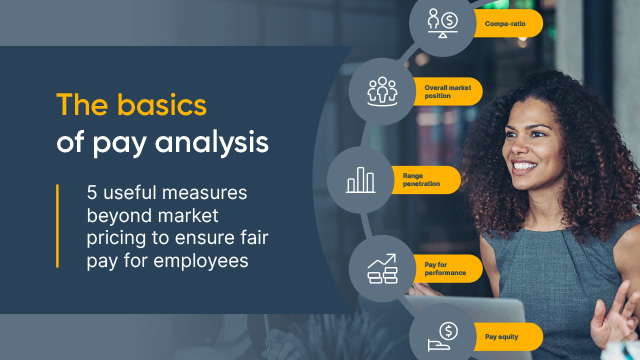

Guide
How to set a defensible salary for a newly reclassified employee before guesswork turns a classification fix into a pay equity problem.
Download
Extended liability rules take effect October 1, and legal guidance says a PEO relationship doesn't transfer the exposure away.

Only four of 27 EU member states met the transposition deadline, but the reporting clock is already running for everyone else.

A 48-million-response dataset flags manager skill gaps as one of 2026's defining workplace risks.