Workday's October 2026 Global Workforce Report finds employees are staying put while their jobs change underneath them. Promotions are flat, internal moves are shrinking, and the people planning to stay are less likely to recommend their employer.

Key Takeaways
For two years, HR leaders have been told the Great Resignation is over and the "big stay" has arrived. Turnover is down, tenure is up, and most people are keeping the jobs they have. A new dataset suggests that reading is dangerously incomplete. Workday's October 2026 Global Workforce Report, released October 5, finds that internal moves fell at 57% of employers year over year and promotion rates worldwide barely moved. People are staying, but they are not going anywhere.
The report draws on a global survey of 6,001 employees and business leaders, including roughly 1,780 decision-makers, plus de-identified workforce and recruiting data from Workday customers with 250 or more employees. Its central finding is captured by Phil Willburn, Workday's vice president of people systems, intelligence and support: "Employees may not be changing jobs, but their jobs are changing around them." That is a learning and development problem before it is a retention problem.
Voluntary turnover is running at roughly 16% a year in Workday's data, and about 70% of employees are still with the same company two years later. On paper that is stability. Underneath it, about half of employees did not even attempt an internal move last year, and 27% of those who did not try said they saw no attractive opportunities inside their own organization. The report also found that employees planning to stay are less likely to recommend their employer, which is the signature of people who have stopped looking for an exit without ever buying in.
The external market explains part of the stillness. The Bureau of Labor Statistics' September jobs report, summarized by staffing firm Eastridge, showed employers adding just 29,000 jobs with unemployment holding at 4.2%. Workday's recruiting data shows the median filled role now draws 69 applicants, up from 58, while time to fill holds at about 60 days. When outside options look crowded, staying feels like the safe choice, and that makes it easy for employers to mistake inertia for engagement.
The pay data makes the gap sharper. ADP figures reported by HCAMag put September's median base pay growth at 3.0% for workers who stayed with their employer and 4.8% for those who changed jobs, against 3.4% inflation over the 12 months through August. The same report cites National Bureau of Economic Research work on 16 million private-sector workers finding that 43% of people who stayed with the same employer from 2021 to 2024 ended up with lower real wages. Loyalty, in other words, is currently being paid below the cost of living.
What makes this more than a compensation story is that employees know exactly what they are missing. In Workday's survey, 79% of workers said they knew which skills they needed to succeed, but only 66% said their employer was helping them develop those skills. That 13-point gap is not a diagnosis problem. The workforce has already done the diagnosis. It is a delivery problem.
Confidence is not the constraint either. Some 65% of workers said they could learn new skills if required, and 76% of heavy AI users expect the technology to create new career opportunities, even as 62% of the same group believe it will reduce the value of the skills they have now. The demand side is moving fast: Workday's analysis of roughly 550 enterprise employers found demand for basic AI skills fell 25% between January and July 2026, while demand for advanced AI skills, such as building tools and automating workflows, rose 51% between September 2025 and July 2026.
"Employees may not be changing jobs, but their jobs are changing around them. Leaders need to be honest about what's different and give people a way to keep up." – Phil Willburn, VP, Workday
The most worrying number in the report sits in the same skills data. Mentions of management and leadership skills in job requirements fell 7%, and mentions of training skills fell 13%. At the moment employees most need someone to translate a changing job into a development path, organizations are signaling that the people who coach, train, and promote are a lower priority. Flat promotion rates and a thinning management layer are two halves of the same pattern.
The organizations handling this well treat the stayers as their primary talent pipeline rather than a retention statistic. That means measuring internal movement as seriously as external hiring, funding the managers who make movement possible, and being candid about how roles are changing. With 69 applicants for every filled external role and a 60-day fill time, an internal candidate who already knows the systems and culture is often the faster and cheaper hire.
Low turnover can hide a workforce that has stopped growing, stopped advancing, and quietly started discounting its employer. The people who stayed through a tight market are the most cost-effective talent an organization has, and Workday's data says many of them are waiting to see whether staying still leads anywhere. HR teams that answer that question with real development paths will keep them. The ones that read stability as satisfaction may find out otherwise when the market loosens.


Guide
Flat promotion rates and a 7% drop in demand for management skills are exactly the kind of signals this guide teaches HR to read, with a fix for each before stalled stayers start to leave.
Download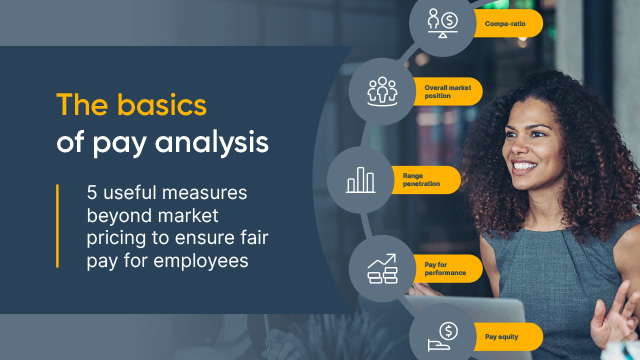

Guide
With stayers' base pay rising 3.0% against 4.8% for job changers, this introduction shows how to run the analysis that reveals whether tenured employees now trail recent hires in the same roles.
Download

Playbook
When jobs change around people who are not changing jobs, this framework helps HR explain what is different, manage resistance, and keep stayers aligned through the transition.
Download
Flattening handed surviving managers 12.1 direct reports and 22% engagement. Gallup's newest data says team size isn't what's breaking them.

Organizations investing in targeted reskilling programs are seeing stronger internal mobility and lower attrition.

The annual retreat and 360 feedback cycle aren't cutting it. A new model built around real-time coaching is gaining ground.