One rigorous study says entry-level hiring has collapsed at AI-adopting companies. Another says AI-heavy firms are growing junior headcount faster than anyone. Both are right, and which side of the paradox your company lands on is a choice, not a forecast.

Key Takeaways
Ask two credible research teams what AI is doing to entry-level jobs and you'll get two confident, opposite answers. A Harvard working paper from economists Seyed Hosseini and Guy Lichtinger, drawing on 66 million workers across more than 280,000 U.S. firms, found that companies adopting AI have cut entry-level hiring by roughly 80% per quarter since 2023, with entry-level employment falling 9% relative to peers within six quarters of adoption. Stanford's analysis of ADP payroll data points the same direction: a 16% relative employment decline for early-career workers in the most AI-exposed fields.
Then there's the other column of evidence. A Ramp Economics Lab and Revelio Labs study of more than 21,000 U.S. employers found that companies investing heavily in AI grew total headcount 10% in the two years after adoption, and grew entry-level headcount 12%. Google's VP of recruiting says junior hiring there is accelerating, not shrinking. And Strada's May 2026 survey of nearly 1,500 executives and senior talent leaders found 2.7 times as many employers expecting AI to increase their entry-level hiring in 2026 as expecting it to decrease.
Contradiction? Not quite. Read together, the studies describe a fork in the road. Companies that treat AI as a substitute for junior labor are, in fact, hiring dramatically fewer juniors. Companies that redesign work around AI are hiring more of them, because a junior who can run AI-augmented workflows produces something closer to mid-level output. The paradox resolves into a strategy question, and talent acquisition leaders are the ones holding it.
"Juniors trained to use AI properly become more valuable faster. A first-year strategist who knows how to build and run an AI workflow can do work that used to take a team of five." – Dan Gilbert, Founder and Global CEO, Brainlabs
The most important finding in the Strada data isn't about volume at all; it's about the content of the jobs. Forty-two percent of employers say AI has increased the analytical and judgment-based responsibilities of entry-level roles, rising to 60% in tech, while 41% say AI has reduced the foundational, skill-building tasks those roles used to contain, and a third report less routine administrative work. The rung didn't vanish. It moved up. New hires are now expected to start where second- or third-year employees used to operate.
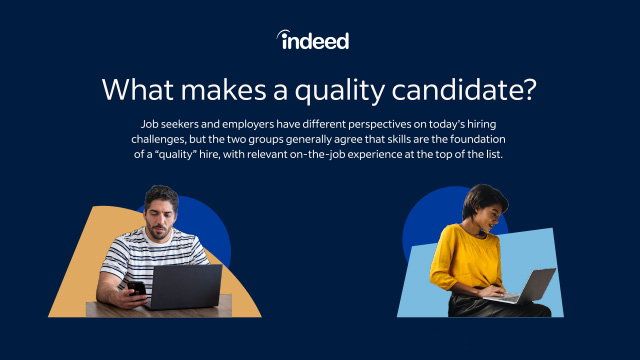
That reshuffling shows up in what employers say they want. Strada's respondents rank critical thinking and communication at 4.3 out of 5 for early-career candidates, comfortably above AI literacy at 3.6. The tools, employers seem to be saying, can be taught; judgment is the scarce input. Notably, candidates with direct work experience in similar roles outrank those with perfect GPAs and no experience, a quiet indictment of every screening funnel still sorting on credentials rather than demonstrated capability.
For recruiting teams, the entry-level paradox lands as three practical problems. First, the definition of a quality candidate has genuinely changed: if the job now starts at analysis and judgment, screening for tool fluency or pedigree misses the target. Second, the pipeline math has changed: firms that cut junior hiring for two years are already reporting a hollow bench for promotion into mid-level roles, the cohort they didn't hire in 2024 is the manager class that won't exist in 2028. Third, the manager burden has changed: first-time managers are now onboarding juniors into roles with less routine scaffolding and higher ambiguity, which makes coaching skill, not just technical oversight, the limiting factor on how fast new hires become productive.
The entry-level paradox will eventually resolve itself in the aggregate data. But inside any single company, it resolves the day leadership decides whether AI is a headcount substitute or a capability multiplier. The companies choosing the second path are quietly accumulating the young talent the first group stopped hiring, and in three years, that will look less like a hiring philosophy and more like the whole ballgame.

Guide
How leading employers are redefining quality of hire, and the signals that actually predict success in redesigned, AI-augmented roles.
Download

Guide
The managers onboarding today's redesigned entry-level roles need coaching skills, not just oversight. A practical development guide.
Download
Report
Research on what draws high-potential candidates in a market where early-career expectations, and roles, are being rewritten.
Download
Forward-thinking companies are retiring the subjective culture fit standard for data-driven assessments.

Early adopters are outperforming peers on quality of hire and retention, if they avoid these common pitfalls.

A comprehensive new study breaks down exactly where bad hire costs accumulate.