Governor Hochul signed S3460 on September 9, 2026, giving New York employees a legal right to see and dispute their personnel file for the first time. The same documentation standard is already reaching pay records and international contractor files, and most HR teams aren't ready for either one.

Key Takeaways
A personnel file has always belonged to the employer, not the employee whose name is on it. Workers could ask what was in theirs, argue about it, occasionally sue over it, but they had no legal right to actually see the page. New York just erased that line, and the law arrives at the same moment pay records and international contractor files are being held to the same standard.
On September 9, 2026, Governor Kathy Hochul signed Senate Bill S3460, adding a new Section 210-b to the New York Labor Law. Phillips Lytle calls it "a significant shift toward worker transparency rights" in a state where personnel files had been treated purely as employer property, with no mandatory employee access at all. Once the law takes effect on November 8, 2026, sixty days after signing, covered employers must produce a copy of an employee's personnel file within five business days of a written request, at no charge, and workers can make that request up to twice a year.
The law's reach extends past the request itself. Employers have ten days to notify an employee whenever they add information that could affect that person's qualifications, promotions, transfers, compensation, or eligibility for discipline, and the employee can respond with a written statement that becomes a permanent part of the file rather than a side note attached to it. Law and the Workplace notes that complete personnel records must now be retained for three years after employment ends, and a worker who believes an entry is knowingly false can seek its removal through the courts. Violations carry Attorney General fines of $500 to $2,500 per instance, a private right of action, and an explicit anti-retaliation provision.
Compensation sits inside the same definition the new law protects. S3460 covers any record that could affect an employee's eligibility for a raise or a promotion, which means a pay decision an employer can't explain on paper is now something an employee has a guaranteed right to read and formally dispute. That exposure lands on top of an existing gap: Littler's European Employer Survey found only 24% of employers describe themselves as "very prepared" to meet the EU's parallel pay-documentation requirements, a preparedness level that has barely moved.
The underlying pay data isn't improving fast enough to make that documentation gap comfortable. Payscale's 2026 Gender Pay Gap Report found the uncontrolled gap widened to $0.82 for every dollar men earn, down from $0.83 the year before, with the gap climbing from 12% at the start of a career to 25% after three decades. Women 45 and older earn $0.71 per dollar, and female executives earn $0.69. A pay decision that can't be defended with real analysis is exactly the kind of file entry the new access-and-dispute framework was built to surface.
The documentation standard isn't staying inside domestic personnel files either. Companies that hire internationally through an Employer of Record inherit the same recordkeeping exposure for every worker on the ground, because the EOR is the entity legally holding the employment relationship. "Every obligation the Directive imposes on employers flows directly to the EOR," one analysis of the EOR market put it, meaning salary band disclosures, pay equity audits, and restructured payslip data become the EOR's problem to solve, not the client's. Contractor classification across the EU and the UK carries a parallel version of the same risk: misclassify a worker in the wrong jurisdiction and the paperwork gap is no longer a quiet fix, it's a compliance failure with the same kind of audit trail New York just wrote into law.
None of these three developments arrived by coordination, a state legislature, a European directive, and the EOR market moved on their own timelines, but they're converging on the same requirement: if a decision about someone's employment isn't written down and defensible, it doesn't hold up anymore. HR teams that treat this as three separate compliance projects will spend three times the effort. The teams that treat it as one documentation discipline, applied consistently to domestic files, pay decisions, and international contractor records, will spend a lot less time explaining themselves later.

Checklist
A record-by-record checklist for exactly what New York's new access-and-dispute law expects your personnel files to contain, before the first request arrives.
Download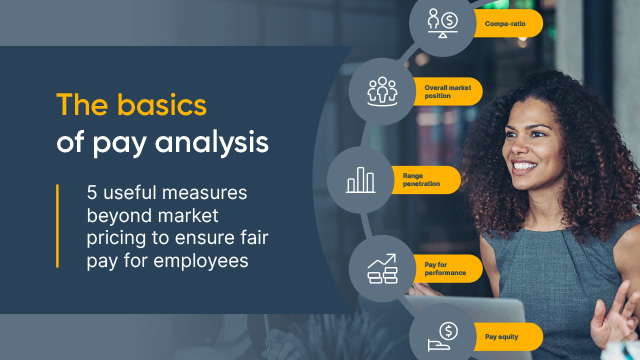

Guide
How to build a defensible pay analysis before a compensation decision becomes a file entry an employee has a legal right to read and dispute.
Download

Guide
Classification rules and compliance requirements across Europe, the Middle East, and Africa, the same documentation standard now landing on domestic personnel files.
Download
Five states are running their own pay and demographic data mandates now that the federal EEO-1 form is on its way out.

Starting October 1, businesses must prove all three prongs of the state's test or the worker is presumed an employee.

Only four of 27 EU member states met the transposition deadline, but the reporting clock is already running for everyone else.