Nearly every HR chief says AI has changed how their company plans its workforce. Very few have changed the plan itself, and the managers expected to carry the change have the least time to do it.

Key Takeaways
Ask an HR chief whether AI has changed how the company plans its workforce, and almost everyone says yes. Ask whether the company is ready for what AI will do to that workforce, and almost no one does. The Conference Board's Q3 2026 CHRO Confidence survey, released October 1, found that 82% of U.S. CHROs say their organization has changed workforce planning because of AI. Yet only 4% say they are very prepared for AI-driven workforce change over the next two years, and 27% say they are unprepared.
That gap between activity and readiness is the story. Organizations have held the meetings, run the impact analyses, and invited the AI leaders into the room. What most have not done is turn any of it into a plan with numbers attached, or give the managers who will carry the change the time to carry it.
The detail behind the 82% is less reassuring than the headline. Half of the CHROs who said AI had changed their workforce planning described the change as slight. Only 19% say AI's effects have been incorporated into workforce and financial planning across the enterprise. In practice, that means most companies are discussing how AI will reshape roles and headcount while still budgeting for next year as though it won't.
The barriers CHROs named are not mainly about money. The most common was difficulty predicting AI's workforce impact (41%), followed by limited AI skills (39%) and an unclear AI strategy (31%). "The biggest obstacles aren't simply budget or data," said Robin Erickson, head of human capital research at The Conference Board. The overall CHRO Confidence Index slipped to 56 from 58 in Q2, with the engagement component falling to 55 from 59 and 24% of CHROs now reporting lower engagement, up from 16% a quarter earlier.
Hiring intentions held up. 53% of CHROs expect to increase hiring over the next six months, against 17% expecting a decrease. But Diana Scott, who leads the board's U.S. Human Capital Center, warned that "the broader workforce picture is becoming more cautious." The share expecting total headcount to grow fell to 49% from 55%. Companies are still hiring, but without a shared view of which roles AI will change, they are hiring into a plan that may not hold for long.
The planning gap has a twin at the executive level. Research from the Center for Talent Innovation's Global Lab, published September 30 as Borrowing from Tomorrow, surveyed 173 organizational decision-makers and interviewed 44 leaders and experts. Only 2 in 5 executives reported an expert understanding of their organization's strategic priorities for the coming year, and just 35% said they strongly understand its workforce priorities.
Those same leaders are redesigning work anyway. 47% said a broad range of human perspectives is never, rarely, or only sometimes intentionally considered in workflow redesign, and 44% said the same of workforce restructuring. The report flags a cost that rarely shows up in an automation business case: "An entry-level task may be inefficient. It may also be how expertise develops." Automate the task without a plan for how people will build expertise instead, and the savings arrive this year while the capability gap arrives in three.
The skills picture is just as blurry. A Harris Poll of 755 HR leaders for the University of Phoenix, fielded July 14 to 27, found 64% are very confident they know which skills employees need, but only 43% are very confident employees actually have them, and 46% are very confident they can predict the skills needed two to three years out. Only 44% say their organization regularly runs formal skills-gap analyses. HR knows what the target looks like. It cannot see how far the workforce is from it.
Where does HR get its skills data? Most often from managers' direct knowledge (51%) and performance reviews (51%), according to the University of Phoenix survey. Yet only 49% of HR leaders say their managers are very prepared to identify, assess, and discuss skill gaps. The main sensor in the system is the one HR trusts least to read accurately.
It is also the most overloaded. A Wiley Workplace Intelligence survey of nearly 1,500 people, reported by HR Dive, found that 84% of employees are very likely to stay when their manager has time to develop them, compared with 41% when the manager doesn't. Wiley called manager availability "not a culture nicety" and recommended employers protect manager time and track it as a retention measure. If AI planning depends on managers spotting skill gaps, coaching people through role changes, and keeping them engaged while it happens, manager capacity is not a side issue. It is the delivery mechanism.
Put the three surveys together and a pattern emerges. Leaders are making automation decisions without a firm grip on priorities. HR is planning without a reliable view of current skills. And the managers expected to close both gaps are stretched too thin to do it. The 4% of CHROs who feel very prepared are not the ones with the most AI tools. They are more likely the ones who have connected those three pieces.
AI has already changed the workforce conversation at almost every company. The CHROs who will feel prepared two years from now are the ones turning that conversation into a budget, a skills baseline, and protected time for the managers who have to make it real.

Guide
A structured approach to workforce planning for the 81% of CHROs whose AI discussions have not yet made it into an enterprise-wide workforce and financial plan.
Download

Guide
The L&D blind spots that matter when HR knows which skills it needs but only 43% of leaders are very confident employees actually have them.
Download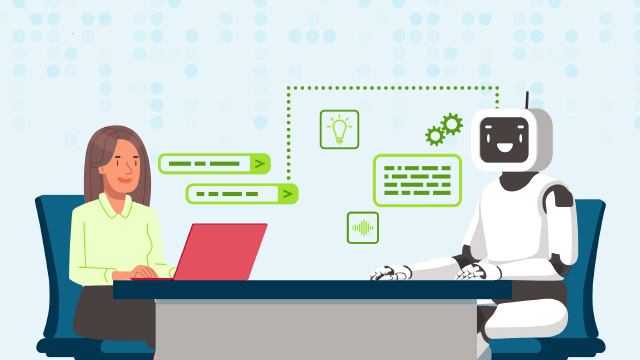

Guide
Ready-made prompts that take routine writing off managers' plates, freeing the development time Wiley links to an 84% stay rate versus 41%.
Download
Self-taught AI upskilling surged for a second straight year while employer-provided training barely moved.

Nearly two-thirds of HR teams use AI regularly, but only 39% formally review what it produces.

The gap between the analytics capabilities companies have and the ones they actually use is widening.