New Highwire research finds AI has quietly become a co-author of employee feedback, while most organizations still describe their review process as AI-free. With year-end ratings about to set merit increases, that gap is about to cost something.

Key Takeaways
Performance review season is about to open at most companies, and a large share of the reviews will be drafted with help from a tool nobody mentions. Research released October 6 by Highwire, the performance coaching program from Knopman Marks, found that 78% of managers used AI to handle employee feedback or a performance review in the past year. Just 16% of employees said they were told AI had any role in theirs. The ratings those drafts produce will feed calibration meetings, merit budgets, and personnel files, which makes an undisclosed co-author a problem HR now owns.
Highwire's report, "Who's Managing Whom," surveyed more than 300 U.S. people managers in August and more than 700 individual contributors. The headline gap is disclosure: managers are using AI for feedback at roughly five times the rate employees are being told about it. The employee verdict on the output is split. According to HR Dive's coverage of the findings, 54% of employees found AI-generated feedback more specific and actionable, while 34% said the feedback they receive has become more generic and 32% said it has become less useful.
Now set that against what organizations report about their own process. The Talent Strategy Group's 2026 Performance Management Report, a benchmark of more than 250 organizations surveyed in late 2025, found that 69.2% do not use AI in reviewing at all, and 49.3% use none in feedback and coaching. Only 2% describe AI as nearly fully embedded in feedback. The two surveys measure different groups at different times, so the numbers do not cancel out neatly. But the direction is hard to miss. Officially, most review processes are human. In practice, most managers are getting help from a chatbot, usually on their own initiative and outside any policy that governs it.
"AI can help you write a faster review, but it doesn't replace human judgment, context, nuance and empathy." – Liza Streiff, Co-founder and CEO, Highwire
If AI only polished sentences, the disclosure gap would be a courtesy issue. It is not, because the review is the input to pay. The Talent Strategy Group found that 82.5% of organizations tie performance outcomes to merit increases and 84.9% tie them to short-term incentives, while 84.7% run calibration meetings to compare ratings across teams. A manager who pastes a few bullet points into a chatbot and accepts the polished narrative is effectively letting it frame the evidence that calibration and merit decisions run on. Yet the same benchmark found 88.7% of organizations do not use AI to help distribute compensation, which means the AI influence on pay is arriving indirectly, through drafts, where no one is reviewing it.
Manager preparation is thin to begin with. Only 19.2% of organizations make training mandatory for reviewing, and 17.9% for giving feedback. Untrained managers handed a tool that produces confident, fluent text in seconds will use it, and the result can sound more authoritative than the manager's actual knowledge of the employee's year. Streiff's point to HR Dive was blunt: context is the thing AI does not have.
There is also a records dimension. A finalized review lives in the personnel file, and states are expanding employees' rights to see and contest what sits there. New York's S3460, signed in September, gives employees a legal right to view and dispute their personnel file. A review that cannot be traced back to observations the manager actually made is a weak document to defend when an employee asks.
The more damaging finding in Highwire's data is what employees do when they stop trusting the process. Two-thirds, 66%, changed how they worked last year out of concern about making a mistake, and only 46% believe employees can make mistakes without fear of repercussions. The specific retreats they reported were telling: 27% avoided a reasonable risk, 27% delayed asking for help, 23% avoided a challenging responsibility, 21% held back an idea, and 16% hid or downplayed a mistake. That is the opposite of what a development-focused review is supposed to produce.
The fix that employees ask for is human time. In separate research released September 25, Wiley Workplace Intelligence surveyed nearly 1,500 people and found 84% were very likely to stay when their manager had time to develop them, compared with 41% when the manager did not. Highwire found a similar imbalance in preparation: 73% of managers were offered a chance to rehearse before a high-stakes moment, against just 44% of employees. AI that saves managers time on drafting is only a gain if that time goes back into the conversation, not into a larger stack of reviews written the same way.
Banning AI from the review process would be unenforceable and would push the use further underground. The better move is to make it visible, bounded, and checked before the ratings lock in for 2027.
AI is not going to leave the review process, and in the hands of a prepared manager it can make feedback sharper. The risk this cycle is narrower and more concrete: ratings that carry pay consequences, drafted by tools employees do not know about, filed in records they can increasingly challenge. HR has a few weeks to decide whether that becomes policy or remains a secret.

Checklist
With 82.5% of organizations tying ratings to merit, this checklist covers the checkpoints and data HR and finance need in place before AI-drafted reviews start setting 2027 raises.
Download

Guide
Only 19.2% of organizations mandate reviewer training; this guide builds the feedback skills that make AI a drafting aid instead of a substitute.
Download

Checklist
Every finalized review lands in a personnel file employees can increasingly see and dispute; this checklist helps HR confirm those records hold up when a rating is challenged.
Download
Workday's October 2026 data finds promotions flat and internal moves shrinking while employees stay put.
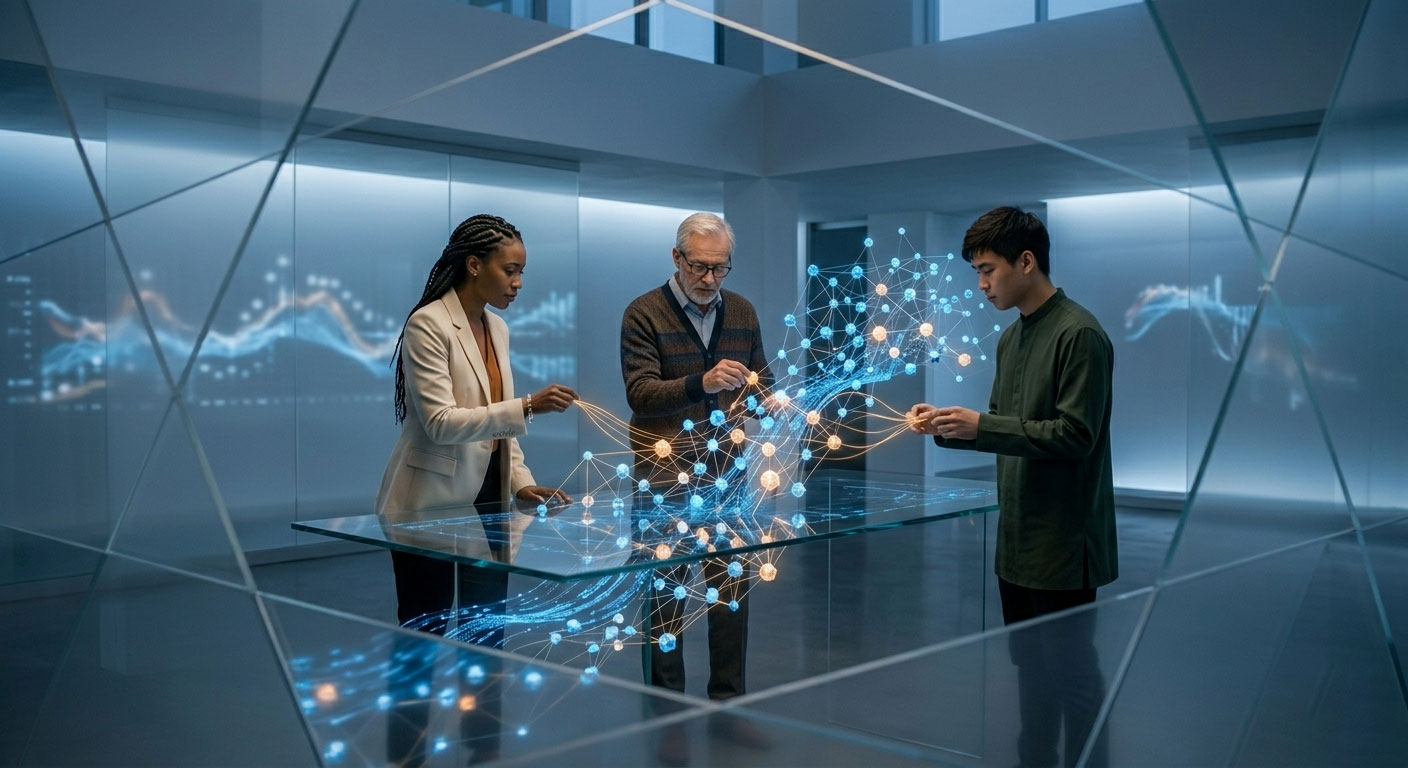
Organizations investing in targeted reskilling programs are seeing stronger internal mobility and lower attrition.
The annual retreat and 360 feedback cycle aren't cutting it. A new model built around real-time coaching is gaining ground.